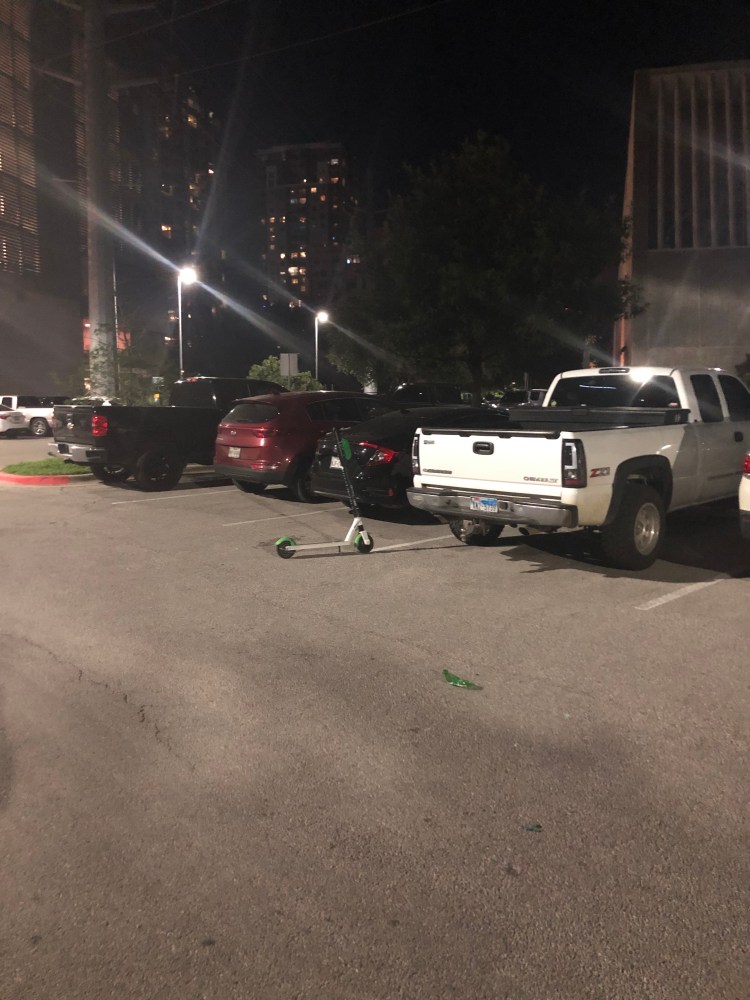
Let’s start off by thinking about why we need parking in downtown Austin.
At one time the only reason to have parking in downtown was for people visiting shops and stores, primarily in the daytime – and remember late hours on Thursdays?
But beginning in the 1980s, tall office buildings were built serving more than just state government. That meant that people now came to downtown office to work – again mostly during the daytime. Then beginning in the early 2000s, apartments and condominiums were built for people to live in downtown Austin.
For over one hundred years, most of the businesses in downtown Austin were involved in state government or supported the people who worked in state government. The office building density was relatively low, creating a low demand for worker parking. Today, there are business headquarters and service centers in downtown Austin with a much greater density or workers per square foot. Since most of these workers still travel into downtown Austin for work (though some live downtown), the need for parking for downtown workers has increased significantly. Unfortunately, most downtown development has not provided adequate parking in private locations for these workers. Many workers in downtown Austin use public parking lots. And this does not even take into account visitors to these businesses who must also use public parking, because developments also do not provide enough visitor parking. Residential developments have also skimped on providing parking. While there are regulations for commercial and residential buildings to provide adequate tenant/patron parking, there are not requirements for residential buildings to provide visitor parking space. And in 2013, the City of Austin eliminated these requirements for development in downtown Austin. As a result, visitors to businesses and residences in downtown Austin must search out public parking.
Since Austin became the Live Music Capital of the World in the 1970s, it began to attract people downtown for live music and other entertainment. For a time, this was not a problem, as most state employees vacated their parking spaces by about 4 PM every day. And at one time you could park in the state office parking garages for free after hours and on weekends. Not anymore. And now there is a lot more to bring people into downtown Austin after hours than just live music. Just consider all of the highly rated restaurants that are found in downtown Austin. And virtually none of them have assigned parking for workers or patrons.
Finally, less than 15 years ago, we were caught in a situation where there were more tourists and business people coming to downtown Austin than we had hotel rooms for. The hotel industry has rapidly caught up. But parking in these hotels is not adequate for their guests, much less for people who drive downtown from the Austin area or from elsewhere in the state to attend conferences and meetings at those hotels.
We need parking in downtown Austin for businesses, their workers and patrons, for downtown residents and their guests, and for visitors at conferences or on vacation, or visitors just enjoying the amenities of downtown. In developing a parking plan, how do we prioritize?
Over 100,000 people work in the downtown area. Most of these workers travel into downtown Austin on most days (when there is not a pandemic), and most of them drive solo. Employers provide parking for most of these workers (the State of Texas Parking garages for example). These workers do help drive the downtown economy, but mostly for just 8 hours a day five days a week.
While about 15,000 people live in downtown Austin, about 75,000 people visit Austin on any given day, and many of them come to downtown Austin. Visitors to downtown Austin are spending money on everything, including parking. Those of us who live downtown may not contribute to the downtown economy on most days. Visitors to downtown Austin contribute significantly to the downtown economy, particularly after business hours. We want visitors to come to downtown Austin, and to encourage them to come downtown, there needs to be economical parking. I would propose that the first priority for downtown Austin parking should be for visitors to downtown.
But a parking plan prioritizing economical parking for visitors may not start with creating parking spaces for those visitors. In 2013 city ordinance eliminated parking ratios for commercial and residential development in the downtown area. The idea was that if they could not find parking, people would find alternatives to driving into downtown.
That has not worked, mostly because in Austin, as in most of Texas, there are not good alternatives to driving a car. I think that a new parking plan should begin with new regulations for parking associated with commercial and residential development. Downtown Austin might have enough public parking if commercial and residential buildings provided adequate parking for their own tenants and visitors. Unfortunately, this regulation cannot be grandfathered, so there is a need to create more public parking.
Take for example the downtown condominium where I live. It is a high rise with 192 residences, and there is a designated parking space for each bedroom. When it was built, there were six designated visitor spaces and two additional handicapped spaces. Immediately, this was not enough, so landscaping was removed for four additional visitor spaces. I had the opportunity to live in a high-rise apartment building on Rainey Street that had 187 residencies and two visitor parking spaces and two handicapped spaces. Obviously, the developers saved money by not including adequate visitor parking in their design, anticipating that visitors would use public parking. My experience is that the number of visitor spaces required for a residential building downtown would be about one visitor space per 10 residences, or 20 spaces for a residential building with about 200 units. Austin needs to regulate development immediately to ensure that future residential buildings provide for adequate parking.
Commercial buildings downtown also need to provide adequate parking for all of their employees and visitors based on estimates of building density. And now we have many buildings that are a mixture of commercial and residential. There should be adequate parking provided by the developer for residents, employees, patrons and visitors. If this is not done, the city of Austin will have to spend money developing more public parking.
What about the parking problem that already exists? Unfortunately, the city of Austin will have to expand public parking to meet the needs of visitors to downtown. In 2017, the Downtown Austin Alliance and the City of Austin commissioned a study and completed a report, The Downtown Austin Parking Strategy. The City has executed shared parking agreements providing for discounted monthly parking rates at a number of locations. This helps employees working downtown, but mostly for after business hours and weekends. Otherwise, very little seems to have been done consistent with the recommendations in this report, most of which make sense.
Immediately, the City of Austin should execute short-term shared parking agreements to provide public parking at private garages. This should be directed to areas where public parking is needed, the 6th Street area, Congress Avenue, West 2nd Street, Rainey Street and anywhere else that significant combined commercial and residential development is scheduled. The City should require or provide for safe parking, with pedestrian access to local businesses, and consistent signage indicating public parking, hours available and pricing. Parking rates should be reasonable to incentivize visitors to park in these locations.
Once all shared parking opportunities are considered, the City may need to build one or more parking garages in areas of high use. In the future, surface lots will all be developed, and there won’t be any place to put parking garages. The time is now to secure these areas for multi-level parking development.
In the future developers should be required add public parking as part of commercial or residential (and combined) developments. At the very least developers should be required to participate in shared parking agreements.
One thing that The Downtown Austin Parking Strategy report noted was the differential between most parking rates provided by the City of Austin versus other public parking operated by private vendors. In September of 2020, the City changed this differential by instituting graduated parking rates leading to a $39 total for 10 hours (or $4 per hour) for City parking operations. We will have to see how this works out. It would be great if there was alternative affordable parking near points of interest (say garage parking), but currently there is not. That is why people in the study spent up to 20 minutes looking for City parking. The result of this pricing may be to discourage visitors to downtown Austin. That is not what we want to do if visitors are our first priority.
 Waterloo to Austin